WRF Physics
Physics Contents
WRF Physics Overview
Cumulus Parameterization
Microphysics
Radiation
Planetary Boundary Layer (PBL) Physics
Surface Physics
Using Physics Suites
Physics Options for Specific Applications
WRF Physics Overview
There are numerous physical processes that take place in the Earth’s atmosphere. The image below shows many of them, and how they interact with each other.
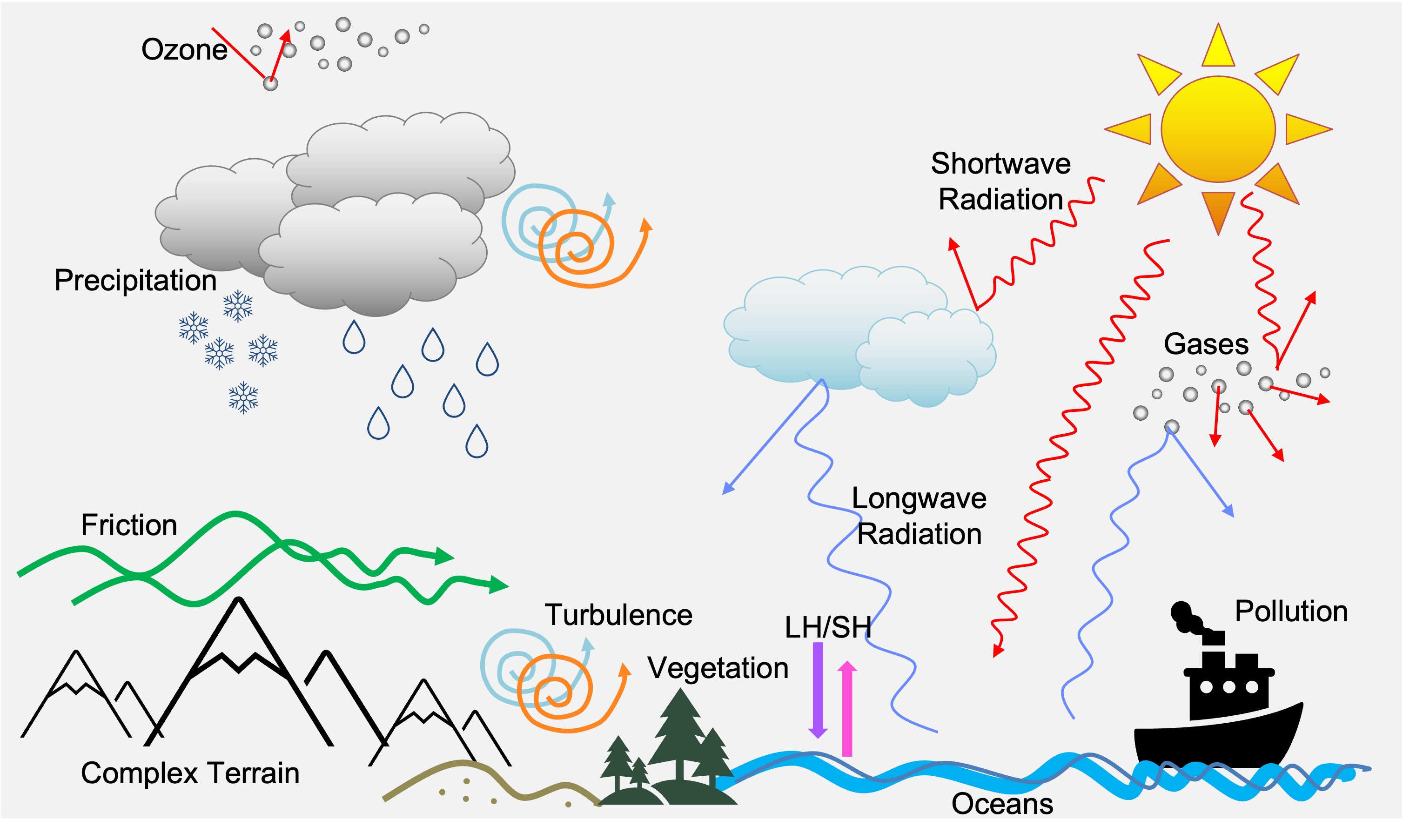

The sun creates shortwave radiation that can be absorbed, deflected, and/or scattered by the Earth’s surface, clouds, aerosols, gases, etc. Longwave radiation is emitted back up from the Earth and can leave the lowest layers of the atmosphere, unless it is deflected or scattered. Heating from radiation creates mixing, which increases wind and turbulence. Clouds produce precipitation in many forms (such as rain, snow, and grauple), and are created by convection. There are chemical components, such as aerosols and ozone, and pollutants that come from the Earth. At the surface, the roughness of the land (e.g., moutains, trees, buildings) cause friction, which creates turbulence. All of these processes work together to create our weather.
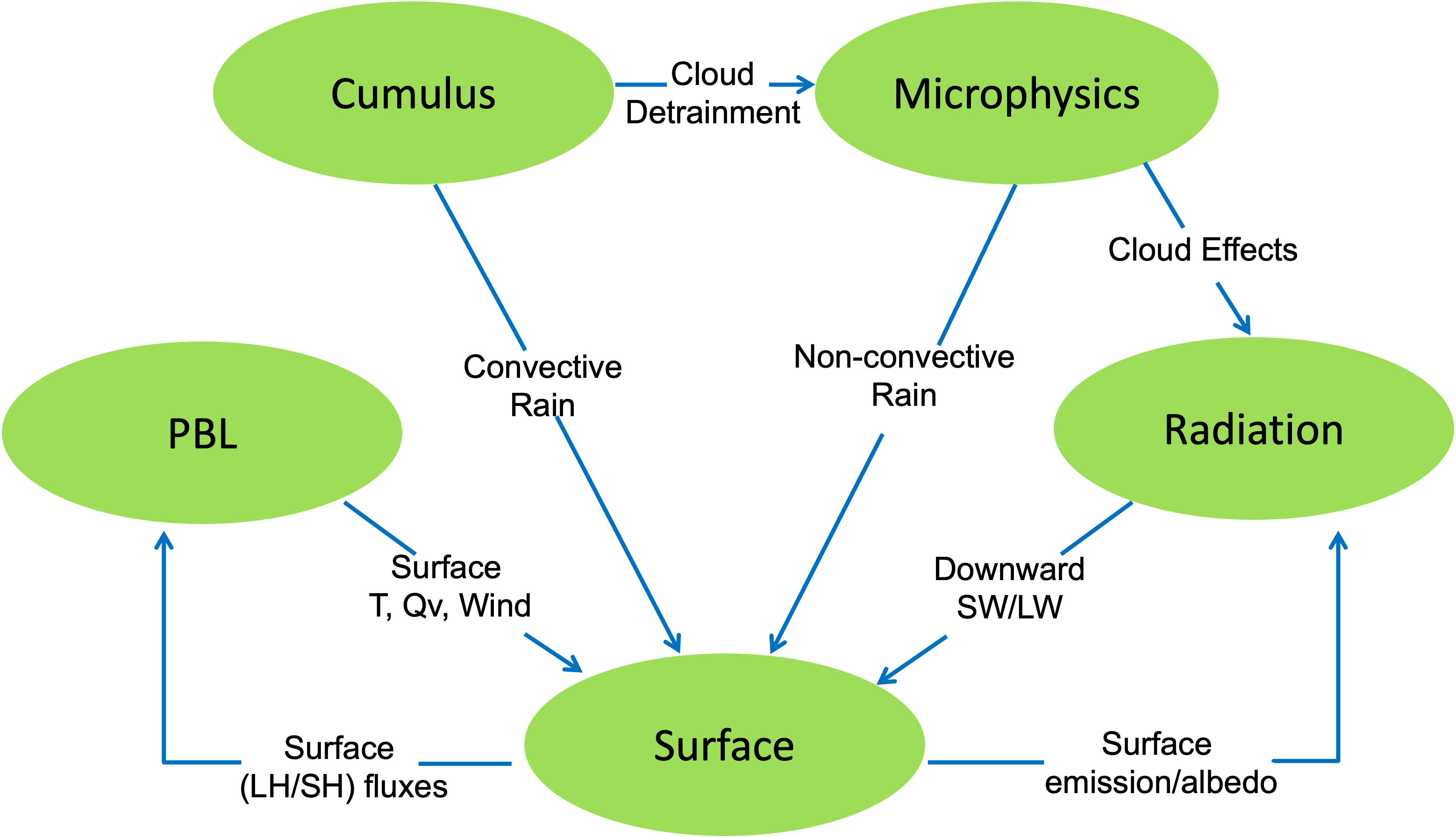
The WRF model includes different types of physics schemes responsible for different components of the physical processes. All of these schemes interact with each other during model simulations to emulate physical processes in the Earth’s atmosphere.
Next section: Cumulus Parameterization